
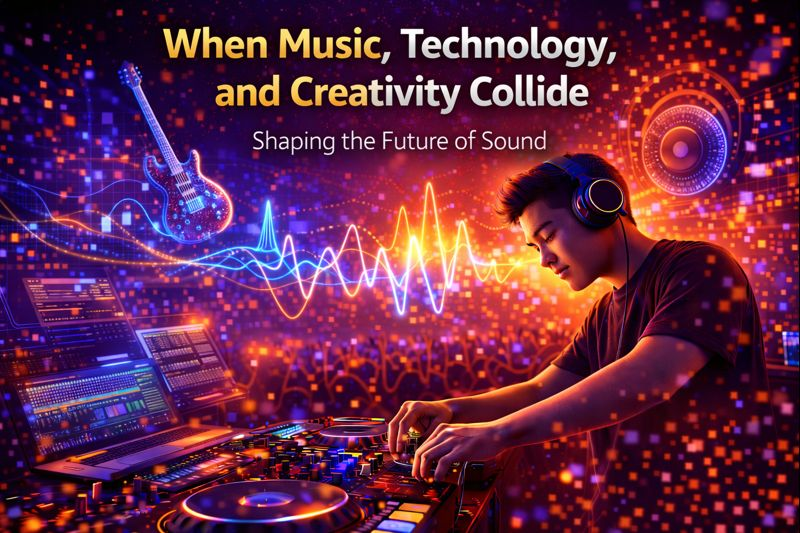
Shaping the Future of Sound
The modern music landscape is defined by a powerful intersection where music, technology, and creativity collide. This convergence has reshaped how sound is created, experienced, and shared across the world. Today, artists are no longer limited by traditional tools or boundaries—technology has become a creative partner, expanding the possibilities of musical expression.
Technology as a Creative Catalyst
Technology has transformed music production into an accessible and innovative process. Digital audio workstations, virtual instruments, and advanced software allow musicians to compose, record, and experiment with sound from anywhere. What once required expensive studios can now be achieved from a laptop, opening doors for independent artists and new voices.
Rather than replacing creativity, technology amplifies it. Artists can layer sounds, manipulate textures, and explore genres in ways that were previously impossible. This freedom encourages experimentation and pushes music into new creative territories.
Redefining Performance and Experience
Live performances have also evolved through technology. Lighting systems, visual effects, and synchronized digital elements transform concerts and DJ sets into immersive experiences. Music is no longer only heard—it is seen and felt.
Technology enables real-time interaction between performers and audiences. From live remixing to interactive visuals, performances become dynamic, unique moments shaped by both creativity and innovation.
Creativity Without Borders
The fusion of music and technology has removed geographical and cultural barriers. Artists can collaborate globally, blending influences from different cultures and musical traditions. This exchange leads to fresh sounds that reflect a truly global creative identity.
Online platforms and social media further support this borderless creativity. Musicians can share their work instantly, receive feedback, and build communities without relying on traditional industry gatekeepers.
The Role of Artificial Intelligence and Innovation
Artificial intelligence is emerging as a new creative tool in music. From generating melodies to assisting in sound design, AI challenges artists to rethink creativity itself. Rather than replacing human expression, AI often acts as a collaborator—sparking ideas and accelerating creative workflows.
Innovation continues to redefine what music can be, encouraging artists to explore new forms of storytelling through sound.
The Future of Music Creation
As music, technology, and creativity continue to merge, the future of sound becomes increasingly limitless. The next generation of artists will grow up fluent in both musical and digital languages, creating experiences that are deeply personal yet technologically advanced.
Conclusion
When music, technology, and creativity meet, they create more than sound—they create culture, connection, and innovation. This powerful collision is shaping the future of music, where imagination knows no limits and creativity thrives through technology.
Leave a Reply