
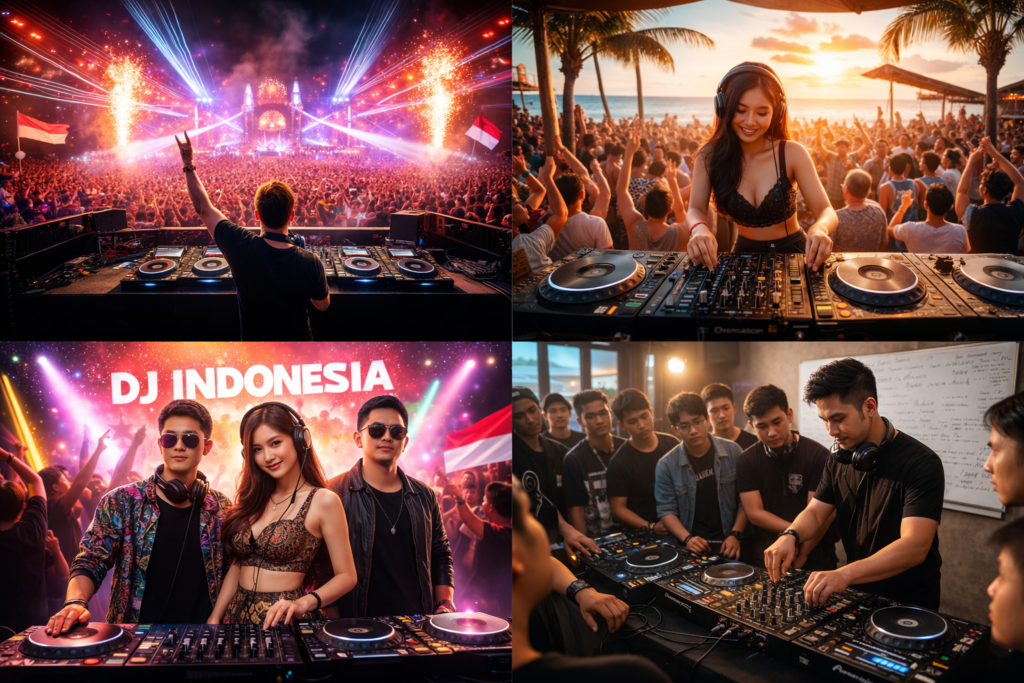
The DJ scene in Indonesia has grown rapidly over the past two decades. This phenomenon is evident in the growing number of clubs, festivals, and electronic music communities popping up in major cities. This development is influenced not only by the globalization of modern music but also by the emergence of local talent capable of competing on the international stage. Amidst technological advancements, DJing has become an attractive career option for Indonesia’s younger generation.
The development of DJs in Indonesia began in the 1980s, when disco music began to gain popularity in major cities. At this time, DJs were still considered merely song arrangers, not yet the full-fledged performers they are today. However, changes began to be felt when electronic music entered Indonesia in the 1990s, bringing influences from house, techno, and trance that became increasingly popular among urbanites. This shift in taste paved the way for the emergence of electronic music communities that became the foundation of modern Indonesian DJ culture.
In the early 2000s, the nightclub scene flourished, creating a space for local DJs to showcase their skills. Cities like Jakarta, Bandung, Surabaya, Bali, and Yogyakarta became centers of the electronic music movement. Bali even became a prime destination for tourists seeking world-class electronic music. With its beach clubs, annual festivals, and international events, Bali became a melting pot for local and international DJs.

With the advancement of technology, the number of DJs in Indonesia increased significantly. Easy access to equipment, mixing software, and online tutorials has attracted many young people to learn DJ techniques independently. In fact, many professional DJ schools have been established to provide formal training for aspiring DJs. This phenomenon demonstrates that DJing is increasingly being accepted as a viable and promising career in Indonesia.
DJs are no longer confined to clubs; they are now also exploring various digital platforms. With the rise of streaming services, social media, and video platforms, DJs can expand the reach of their work. Many Indonesian DJs have successfully gained international fans through remixes, live sets, and online performance videos. The digital era provides DJs with broader opportunities for limitless growth.

Electronic music festivals also play a crucial role in the development of DJs in Indonesia. Major events like DWP (Djakarta Warehouse Project), Invasion, and various other EDM festivals have brought top global DJs to Indonesia. Their presence not only provides entertainment but also inspires local DJs to pursue international professional standards. At these festivals, Indonesian DJs are often given the opportunity to perform on stage with global DJs, a valuable experience that enriches their careers.
The future of DJing in Indonesia looks very bright. With the growing public acceptance of electronic music, the industry is expected to continue to grow. Support from the entertainment industry, music communities, and digital technology will be a key driver for the next generation of DJs. Indonesia has great potential to become one of Asia's electronic music hubs.
The future of DJing in Indonesia looks very bright. With the growing public acceptance of electronic music, the industry is expected to continue to grow. Support from the entertainment industry, music communities, and digital technology will be a key driver for the next generation of DJs. Indonesia has great potential to become one of Asia's electronic music hubs.
Leave a Reply