
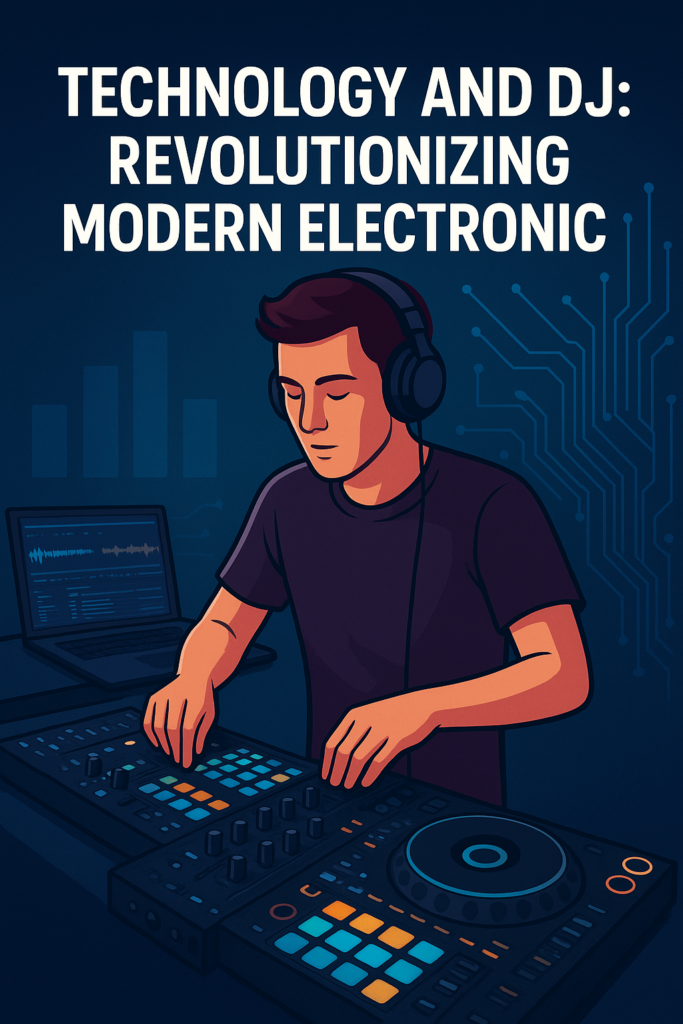
Technological advancements have brought about significant changes in the world of music, particularly in the role of DJs in the modern electronic music industry. While DJs were once known only as record players in nightclubs, they have now evolved into digital artists who combine creativity, technology, and innovation. This revolution has made DJs central to the transformation of electronic music in the modern era.

In the early days, DJ technology relied heavily on analog equipment such as turntables and manual mixers. DJs had to rely on manual precision and a keen ear to synchronize tempos and create smooth transitions between songs. This process required years of practice and a deep understanding of music. However, technological limitations limited the scope for DJ exploration.

Entering the digital era, technology began to take a dominant role. The advent of CDJs, DJ controllers, and digital software drastically changed the way DJs work. Software such as Traktor, Serato DJ, and Rekordbox allows DJs to automatically set tempos, store cue points, and even quickly synchronize beats. This technology does not eliminate creativity, but rather expands the artistic possibilities of a DJ.
One of the biggest impacts of the technological revolution is increased accessibility. Now, anyone can learn to DJ with just a laptop and a simple controller. This opens up opportunities for young people to enter the world of DJing without having to spend a fortune on analog equipment. Technology also allows DJs to learn independently through online tutorials, digital courses, and global communities on social media.

Beyond the mixing process, technology has also revolutionized the way DJs create music. Many modern DJs also act as music producers. With the help of Digital Audio Workstations (DAWs) such as Ableton Live, FL Studio, and Logic Pro, DJs can create songs, remixes, and mashups right from home. Production processes that were once limited to expensive studios are now accessible to anyone, accelerating the emergence of new talent in the electronic music industry.

Visual technology also enriches the modern DJ experience. Today's DJ performances are not just about sound, but also about visuals. The use of LED screens, visual mapping, lasers, and digitally controlled lighting effects make DJ performances a multimedia spectacle. DJs don't just play music, but create immersive experiences that harmoniously combine audio and visuals.
However, technological advances have also sparked debate within the DJ community. Some argue that technological conveniences diminish the value of traditional DJ skills. Nevertheless, many professional DJs view technology as a tool, not a substitute for creativity. The ability to read the mood, choose the right songs, and evoke the emotions of the audience remains a core part of DJing, a skill that cannot be replaced by machines.

In the future, the role of technology in the DJ world is predicted to grow even more. Artificial intelligence (AI), virtual reality (VR), and augmented reality (AR) are beginning to be explored in electronic music performances. Virtual DJs, digital concerts, and technology-based interactive experiences are signs that this revolution is continuing.

Technology and DJing are now inseparable. The two complement each other in creating the modern electronic music revolution. Amidst rapid change, one thing that remains is the spirit of the DJ as a driver of energy, emotion, and creativity in every electronic beat.
Leave a Reply