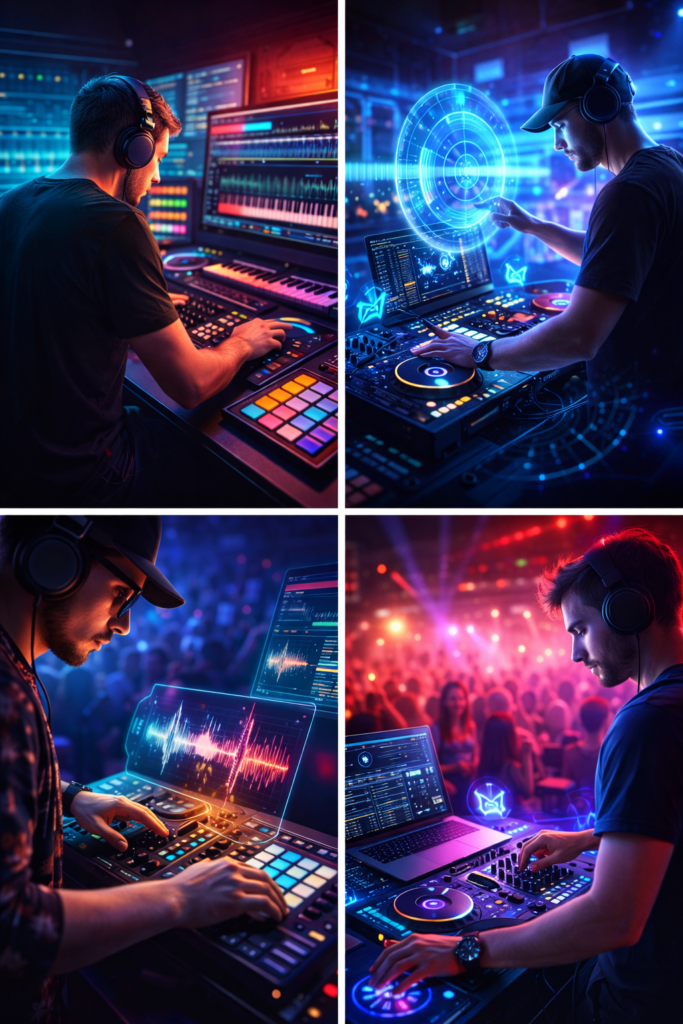
Technology has become one of the most powerful forces shaping creativity in the modern DJ world. What once required crates of vinyl records, manual beatmatching, and limited sound manipulation has evolved into a highly dynamic digital ecosystem. Today, DJs are not only performers but also producers, sound designers, and digital artists whose creativity is deeply influenced by technological innovation.
One of the most significant technological changes is the shift from analog to digital tools. DJ software such as Serato, Traktor, and Rekordbox allows DJs to store thousands of tracks in a single device. This access expands creative freedom, enabling DJs to experiment with diverse genres, tempos, and moods within one set. Instead of being limited by physical media, DJs can instantly explore new musical directions, creating more complex and expressive performances.
Technology has also transformed how DJs manipulate sound. Modern controllers, mixers, and digital effects give DJs the ability to reshape tracks in real time. Looping, sampling, beat slicing, and live remixing allow DJs to turn existing music into something entirely new. Creativity is no longer limited to track selection; it extends to sound transformation. A DJ can now reimagine a song on the spot, blending multiple elements to craft a unique sonic experience for the audience.
Another major influence is music production technology. Many DJs are also producers, using digital audio workstations (DAWs) such as Ableton Live or FL Studio to create original tracks. These tools provide endless possibilities for experimentation with sound design, arrangement, and structure. As a result, DJs are no longer just interpreters of music but creators of new musical identities. Technology allows them to develop a signature sound that distinguishes them in a competitive global scene.
Artificial intelligence and data-driven tools are beginning to shape DJ creativity as well. AI-powered features can suggest tracks based on key, tempo, or crowd response, helping DJs make faster decisions during performances. While some fear that automation may reduce artistic control, many DJs see it as a creative assistant rather than a replacement. By handling technical tasks, technology frees DJs to focus more on storytelling, emotion, and audience connection.
Visual technology also plays a growing role in DJ creativity. LED screens, lighting software, and synchronized visuals transform DJ performances into immersive audiovisual experiences. DJs often collaborate with visual artists or use software that reacts to sound in real time. This fusion of music and visuals enhances creative expression and strengthens the emotional impact of performances, especially at festivals and large-scale events.
Social media and online platforms further shape how DJs express creativity. DJs can share mixes, live streams, behind-the-scenes content, and experimental projects with a global audience instantly. Feedback from listeners influences creative direction, encouraging DJs to innovate and adapt. Technology enables constant interaction, turning creativity into a dialogue between artist and audience.
However, technology also presents creative challenges. With easy access to tools, originality becomes harder to achieve. Many DJs use the same software and effects, which can lead to similar-sounding performances. True creativity now lies not in the tools themselves but in how DJs use them. The most innovative DJs are those who push technology beyond its intended purpose, combining technical skill with artistic vision.
In conclusion, technology has fundamentally reshaped a DJ’s creativity. It has expanded musical possibilities, enhanced sound manipulation, and transformed performances into immersive experiences. While tools continue to evolve, creativity remains rooted in human imagination and emotional connection. Technology does not replace creativity—it amplifies it, allowing DJs to redefine what is possible in modern music culture.
Leave a Reply