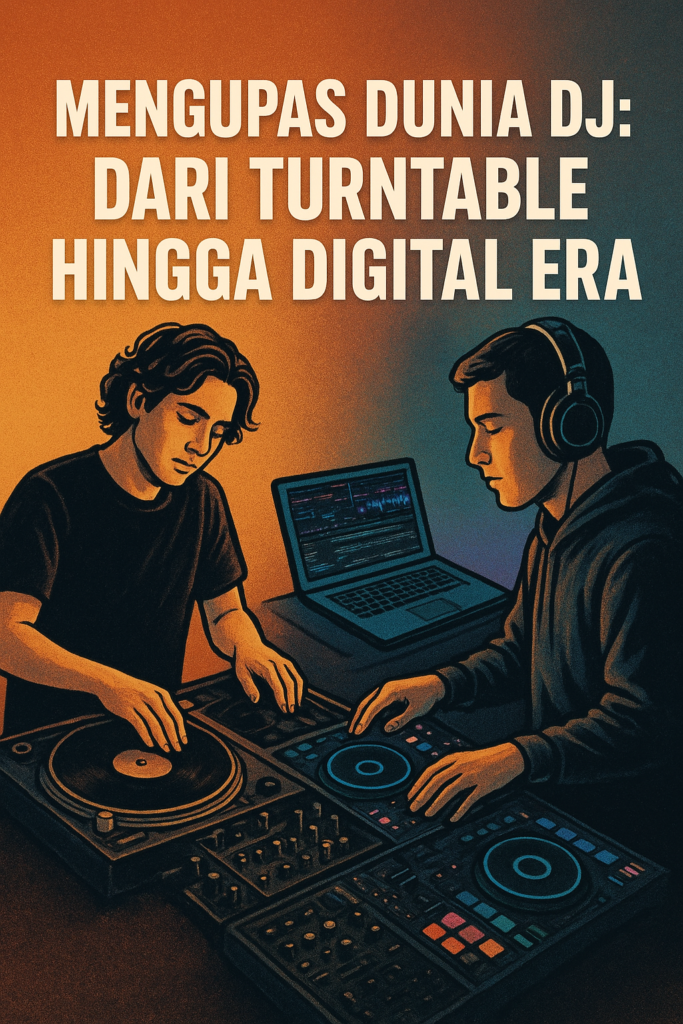
The world of DJing has undergone a long and innovative journey, evolving from simple equipment to a global industry reliant on sophisticated technology. These changes extend beyond the equipment itself, but also to how DJs create, express their musicality, and create an atmosphere that can move thousands of people. From classic turntables to modern digital devices, this evolution illustrates the ongoing dynamics of the electronic music industry.

In the 1970s and 1980s, DJs began to be recognized as artists capable of manipulating music through analog turntables and mixers. They didn't simply play songs, but created new experiences through techniques like scratching, beat juggling, and manual mixing. Turntables became a symbol of creativity, where precision of the hand and a sensitive ear were key. DJs like Grandmaster Flash and Afrika Bambaataa brought turntablism to the global stage, making it a vital part of hip-hop and dance music culture.
Entering the 1990s, advances in audio technology gave way to new innovations. CDJs, or CD-based music players, began replacing vinyl records in clubs and festivals. CDJs brought conveniences to DJs, such as faster track searches, looping capabilities, and more accurate beat marking (cue points). These devices opened the door for more people to learn DJing because they eliminated the need for an expensive vinyl collection. These developments also influenced playing styles, as DJs could perform more precise transitions and experiment with new techniques previously difficult on analog turntables.

The most significant change occurred when the digital era began to dominate the music industry in the early 2000s. The advent of devices such as controllers, DJ software, and portable computers drastically changed the way DJs prepare and play music. Software like Virtual DJ, Traktor, and later Serato DJ introduced features that allowed DJs to automatically analyze tempo, create faster beat syncs, and even provide waveform visualizations that streamlined the mixing process.
With digital equipment, DJs are no longer limited by physical music media. Thousands, even tens of thousands of songs, can be stored on a single laptop, allowing them to freely explore genres and create more dynamic sets. DJ controllers also feature effects buttons, samplers, and performance pads, providing a more experimental playing experience. DJs can now incorporate live remixes, mashups, and even improvisations that previously required professional studio equipment.

Furthermore, the digital era has given rise to a generation of DJ producers—those who not only play music but also create it. DAW (Digital Audio Workstation) software like Ableton Live, FL Studio, and Logic Pro make it easy for DJs to create music from their bedrooms. This has given rise to superstars who have transformed the global EDM industry, such as Martin Garrix, Skrillex, and Marshmello. Music production and DJing have become closely intertwined.
On the other hand, despite rapid technological advancements, turntables still hold a special place in the hearts of veteran DJs and die-hard vinyl enthusiasts alike. Many modern DJs continue to combine analog and digital equipment, such as using DVS (Digital Vinyl System) turntables that allow vinyl to control digital files. This proves that a classic touch still has artistic value that cannot be replaced by technological sophistication.

The journey of the DJ world from turntables to the digital era demonstrates that creativity never stops evolving. DJing is not just a profession, but an art form that continues to transform with the times. While technology brings convenience and new possibilities, the essence of a DJ remains the same: building energy, uniting the atmosphere, and creating an unforgettable musical experience.

From underground clubs to massive festivals, from analog to digital, DJs will always be at the heart of the pulse of electronic music. The combination of skill, technology, and creativity makes DJing one of the most dynamic art forms of the modern era.
Leave a Reply