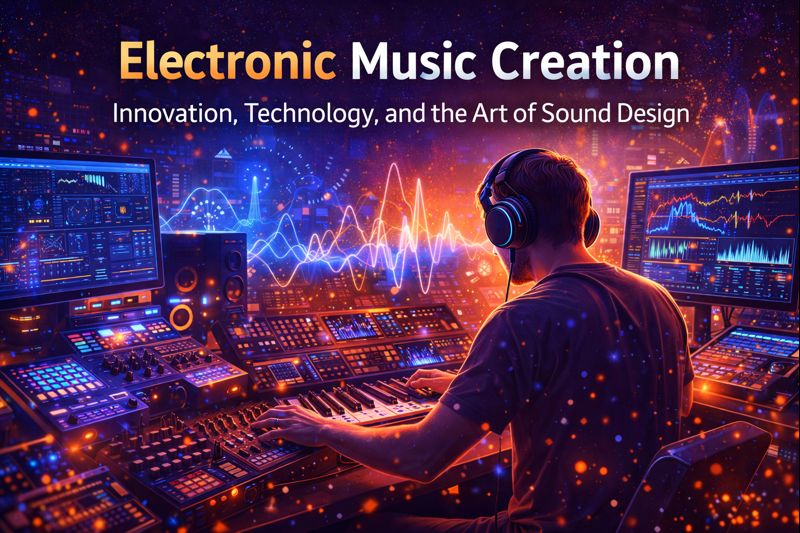
Electronic music creation has transformed the way artists compose, produce, and experience music. What began as experimental sounds produced by analog machines has evolved into a global movement driven by digital technology, creative freedom, and limitless innovation. Today, electronic music stands at the intersection of art and technology, redefining modern musical expression.
The Evolution of Electronic Music Creation
The roots of electronic music can be traced back to early synthesizers, drum machines, and analog recording techniques. Over time, these tools became more accessible, allowing artists to explore new sonic possibilities. With the rise of digital audio workstations (DAWs), electronic music creation moved from professional studios into home setups, empowering a new generation of producers.
This evolution has blurred the line between musician and technologist. Modern electronic artists are not only composers but also sound designers, engineers, and performers who shape every element of their music.
Technology as a Creative Partner
Technology plays a central role in electronic music creation. Software synthesizers, MIDI controllers, and advanced plugins allow artists to manipulate sound in unprecedented ways. Producers can layer textures, sculpt frequencies, and experiment with rhythm and structure without traditional limitations.
Artificial intelligence, automation, and algorithm-based tools are now influencing the creative process, offering new ways to generate ideas and enhance productivity. Rather than replacing creativity, technology acts as a partner that expands artistic potential.
The Art of Sound Design
Sound design is one of the defining aspects of electronic music. Unlike traditional genres that rely heavily on acoustic instruments, electronic music allows artists to create entirely new sounds from scratch. Through synthesis, sampling, and effects processing, producers craft unique sonic identities that distinguish their work.
Sound design requires both technical knowledge and artistic intuition. The ability to balance precision with emotion is what turns digital sound into meaningful musical experiences.
Creative Freedom and Global Influence
Electronic music creation thrives on creative freedom. Artists are not bound by rigid genre rules, allowing them to blend styles such as techno, house, ambient, and experimental music. This openness has led to constant innovation and cross-cultural influence.
With online platforms and streaming services, electronic music creators can share their work globally. This accessibility has turned electronic music into a universal language that connects artists and listeners across borders.
The Future of Electronic Music Creation
The future of electronic music creation promises even greater innovation. Emerging technologies such as virtual reality, immersive audio, and AI-assisted composition will continue to reshape the creative landscape. As tools evolve, the core of electronic music remains the same: the desire to explore sound, express emotion, and push creative boundaries.
Electronic music creation is not just about technology—it is about imagination, experimentation, and the endless pursuit of new sonic possibilities.
Leave a Reply